Adjusted cooking time
0:00
Enter a wattage pair and cooking time to calculate the estimate.
Adjusted cooking time
0:00
Enter a wattage pair and cooking time to calculate the estimate.
Use it for frozen meals, leftovers, mug recipes, snacks, and reheating directions that list a microwave wattage different from yours.
Convert package directions for snacks, leftovers, frozen meals, and quick lunches when your microwave wattage does not match the label.
Use the calculator and charts to get a better starting time, then follow package stirring, resting, and temperature checks for safer results.
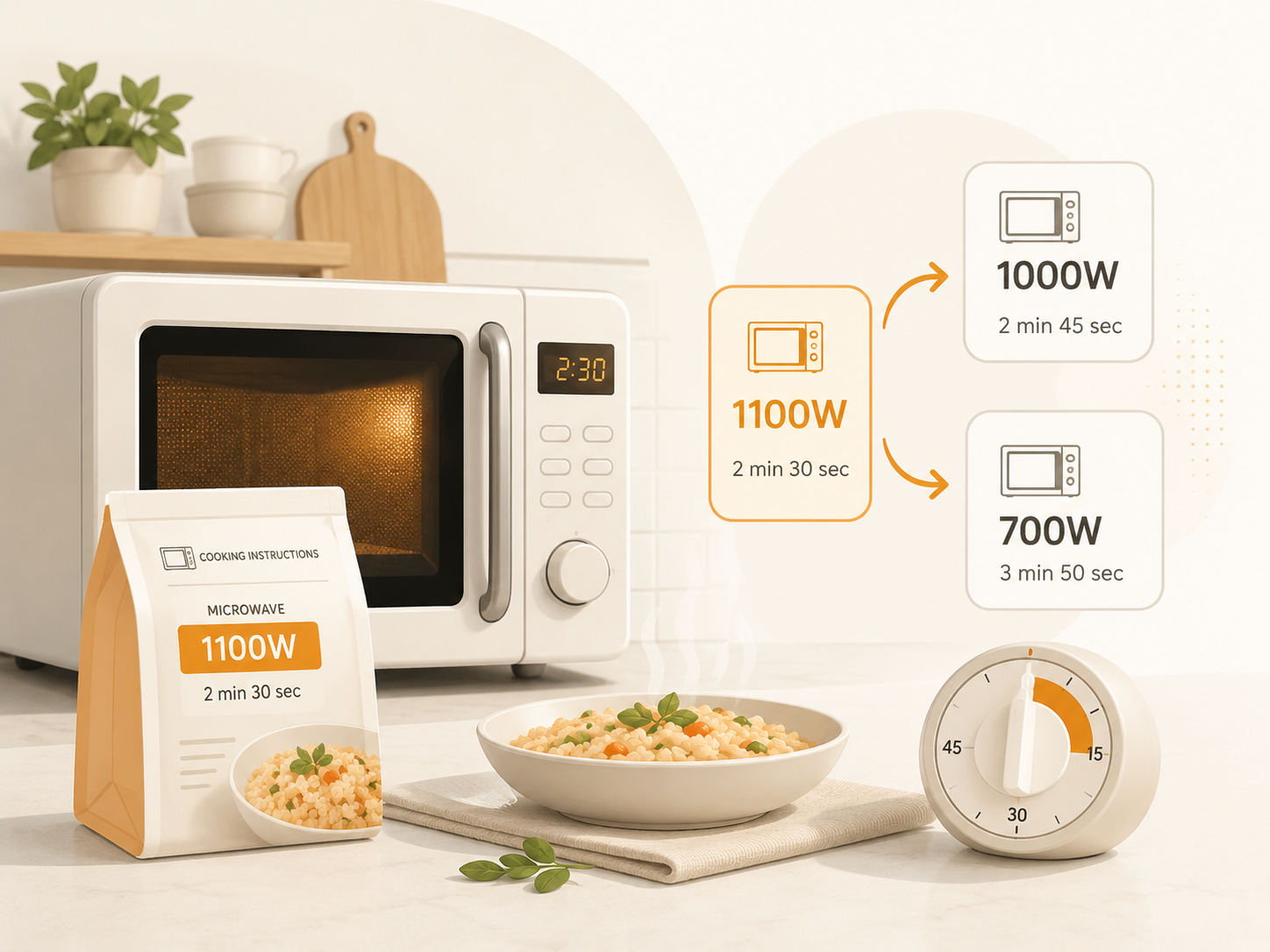
These chart pages give quick reference tables and internal links for users who want the answer without filling out the calculator every time.
Learn the formula, why wattage changes cooking time, and why the result should be treated as an estimate.
Read the guideUnderstand water molecules, hot spots, cold spots, standing time, and why uneven heating can happen.
Read the guideUse the door label, owner manual, product plate, or model search to identify the wattage of your microwave.
Read the guideUnderstand stirring, standing time, cold spots, hot spots, and when a thermometer matters.
Read the guideUse a quick chart for poultry, leftovers, ground meat, seafood, eggs, casseroles, and more.
View the chart